
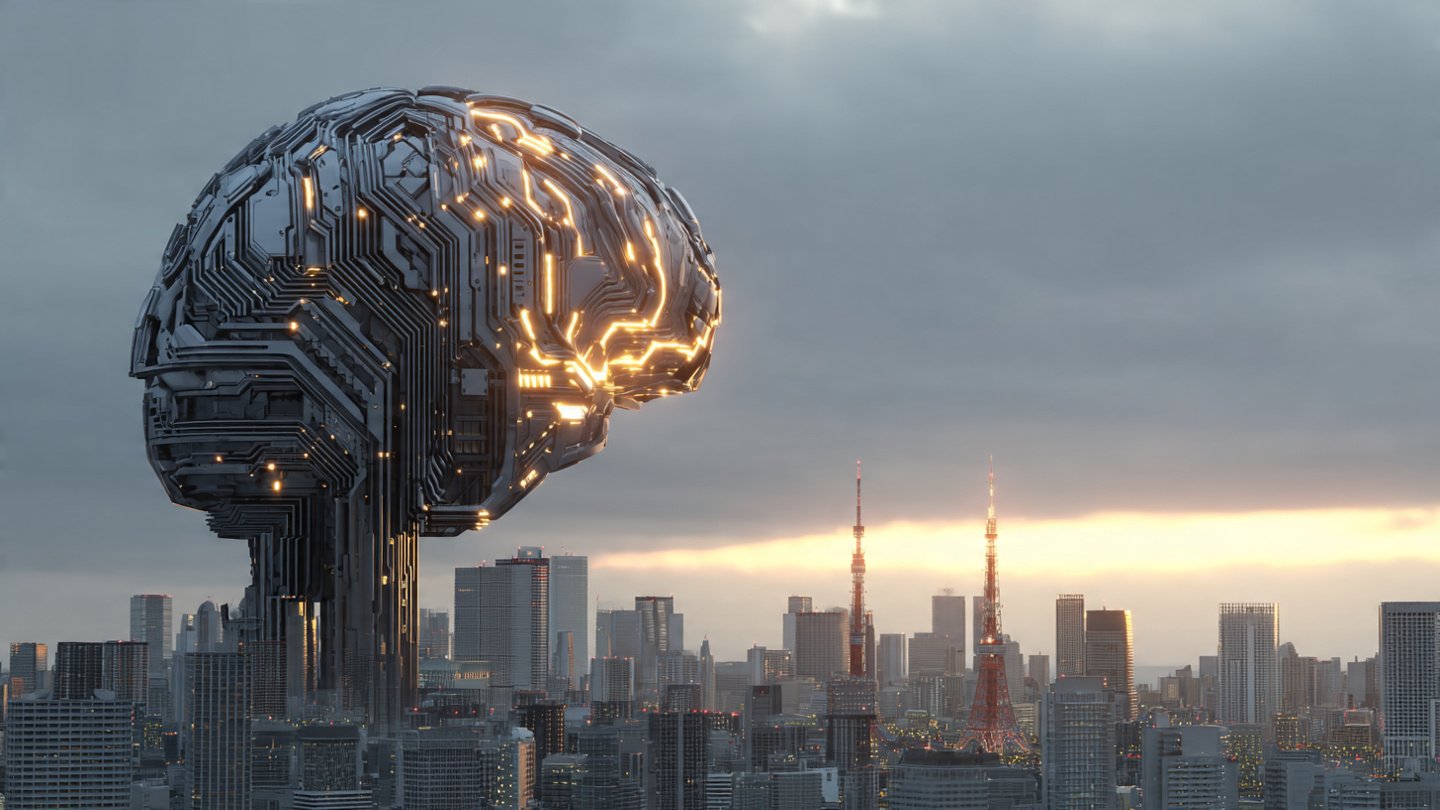
Right, let's talk about AGI, shall we? You hear the term bandied about everywhere these days, often without much thought as to what it actually means. But imagine a future where AI isn't just crunching numbers or generating pretty pictures, but genuinely learning new things, safely and efficiently, just like a human, but perhaps a bit quicker. That's the exciting promise behind what some are calling the first AGI-capable model.
This isn't just another incremental step; it's being presented as a pretty big deal. The core idea is to move beyond AI systems that are essentially black boxes, trained on mountains of data, to something that can truly understand, reason, and act. Think of it as moving from a highly skilled parrot to a genuinely insightful human.
What's the Big Deal with AGI Anyway?
The folks behind this new model are pretty clear about what they mean by AGI, because, let's be honest, the term gets thrown around a lot. They've nailed down three key criteria that, if met, would really change the game:
- Autonomous Skill Learning: This is huge. Imagine an AI that can teach itself a completely new skill without needing human input or existing datasets. No more "data farms" where people churn out information for AI to learn from. This could be a real game-changer for how we interact with technology and even for job markets, as we've discussed before regarding AI's Job Impact: UK Faces Steep Employment Decline. Asia to Follow?.
- Safe and Reliable Mastery: This one's critical. If an AI is going to learn on its own, we really need it to do so without causing chaos. Picture a robot learning to cook; we certainly wouldn't want it setting fire to the kitchen in the process, would we? Safety first, always.
- Energy Efficiency: This is often overlooked but incredibly important. For AI to be truly scalable and beneficial, its learning process needs to be as energy-efficient, or even more so, than a human learning the same thing. This pushes back against the trend of ever-increasing computational demands, which is a big deal for sustainability.
Existing approaches often depend on massive datasets generated through human labour, perpetuating a dystopian reliance on 'data farms.' True AGI liberates humanity from such constraints, empowering societies rather than exploiting them.
This isn't just about technical wizardry; it's about fundamentally shifting the relationship between humans and AI. It's about empowering people, not just making machines smarter, which echoes discussions about Future Work: Human-AI Skill Fusion and how our roles might evolve.
The Road to Superintelligence
So, AGI is the starting point, but the ultimate goal for some is superintelligence. Now, superintelligence isn't just about being really good at one thing, like a chess grandmaster AI. It's about being generally intelligent, capable of mastering all tasks autonomously and efficiently, to the point where human collaboration doesn't even make it better. Imagine that!
The pathway they're outlining has three steps:
Step 1: Universal Simulators
Current AI models are often described as "black boxes." They take an input, give an output, but we don't really know how they got there. They're good at pattern matching, but they don't understand in a human sense. This leads to:
- Inefficiency: They often use enormous amounts of computing power because they don't create structured understanding.
- Brittleness: If you give them something slightly outside their training data, they can break down quite easily.
The new approach aims to fix this with "Universal Simulators." These are designed to:
- Be Multimodal and Embodied: They'd bring together information from all sorts of senses – vision, language, sound, and even physical sensors. This creates a unified "world model" that can understand things across different areas.
- Use Hierarchical Abstractions: Think of it like building understanding in layers. They compress and structure sensory data, creating high-level representations that enable proper reasoning and prediction.
- Grow Scalably: Unlike existing systems that are pretty static, these simulators are designed to grow dynamically. They're meant to learn throughout their "lives" without forgetting old knowledge, and they can expand their capabilities as needed.
Essentially, these simulators are being built to truly understand, reason about, and predict complex systems on their own.
Step 2: Universal Operators
Understanding is one thing, but action is another. That's where "Universal Operators" come in. These are designed to take the understanding from the simulators and translate it into real-world actions.
- Efficient Planning: Instead of trying to plan every tiny detail, which gets incredibly complex, these operators use the high-level understanding from the simulators to plan efficiently. They can set goals and sub-goals, only fleshing out the details when necessary. This is a bit like how a human plans a trip; you decide on the destination first, then the route, not every single muscle movement needed to walk.
- Tool Use: This is where things get really interesting. These operators aren't just limited to their internal capabilities; they can seamlessly interact with tools. This means:
- Using Existing Tools: Plugging into existing APIs, robotic systems, and other services to get things done.
- Creating New Tools: If they need a tool that doesn't exist, they'll autonomously design and build it themselves! Imagine an AI developing new software or even physical tools to achieve its goals.
- Active Learning: This combines planning and tool use for a truly self-directed learning process. Given a high-level request, the operator can design its own experiments to fill gaps in its knowledge, conduct those experiments safely and efficiently, and then learn from the results. It's like automating the scientific method itself, turning AI into a scientific discovery engine.
For example, if you asked an operator to find a new drug, it would plan the experiments, use robots to carry them out in a lab, and then analyse the results, generating new knowledge. It sounds a bit like something out of science fiction, doesn't it?
Step 3: Scaling to Superintelligence
This final step is all about making AGI and eventually superintelligence accessible and useful on a grand scale, much like how the internet evolved.
There's also a big focus on alignment and open-endedness. This means ensuring that these super-intelligent systems align with human values and goals. They're talking about a "Universal objective" of "Freedom" – basically, infinite agency and possibility – combined with individual preferences. This framework is meant to allow for truly open-ended creativity, generating completely new ideas without human limitations.
Early Glimpses of the Future
While this is clearly just the beginning, there have been some fascinating early demonstrations:
- Autonomous Robotics: Robots learning new skills completely on their own, adapting to complex, real-world situations. We've certainly seen plenty of examples of robots in action, like China Deploys Battery-Swapping Humanoid Robot Patrols Along the Vietnam Border, but this goes a step further in terms of autonomous learning.
- Digital Mastery: AI generating novel software and solutions from just high-level instructions, showcasing real creativity and precision.
- Sokoban Experiment: They're showing how AI can solve complex problems like the game Sokoban much faster than humans, just as AI can master chess in a fraction of the time it takes a human. It's about teaching AI to focus on the right details, building a foundation for understanding and acting in the real world. Think about an AI that can read emotions and respond appropriately – that's a whole new level of interaction.
They've even moved from 2D puzzles to full 3D AGI demonstrations. The models are learning to navigate and solve problems in 3D environments, developing crucial skills like memory, spatial reasoning, and decision-making. The goal is to scale this up into a complete world model that can handle open-ended tasks and the complexities of the real world with the kind of flexibility we'd expect from general intelligence.
This really is being framed as a huge step for humanity, much like the layered structure of our own brains. If this all pans out, it could usher in an era of unprecedented "Freedom" and capability. It's certainly worth keeping an eye on, especially as the debate around AI's capabilities and limitations continues to evolve, as highlighted by discussions like the one in Nature about the search for artificial general intelligence here.
YOUR TAKE
We cover the story. You tell us what it means on the ground.
What did you think?
Share your thoughts
Be the first to share your perspective on this story
This is a developing story
We're tracking this across Asia-Pacific and may update with new developments, follow-ups and regional context.